Our first full day in Tokyo included a visit to Meiji Shrine, one of the city’s most famous landmarks. Not surprisingly, it was also one of the busiest locations we visited. The grounds were filled with tourists, all exploring the shrine, participating in traditional rituals, browsing the surrounding shops, and taking photographs of this remarkable place.
One of the more interesting traditions I ran across, involved the shrine’s fortune slips, known as omikuji. For a small fee of 100 yen, visitors can try their luck at one of the fortune kiosks. The process is simple: place your coin in the collection box, draw a wooden stick from a container, note the number written on it, and then open the corresponding drawer to reveal your fortune. If the prediction is unfavorable, tradition allows you to tie the fortune to a designated rack, symbolically leaving the bad luck behind. Then, if you’re feeling optimistic, you can spend another 100 yen and try again.
Although the shrine itself is a major attraction, one of the most impressive aspects of the visit was the surrounding forest. Meiji Shrine sits within a 170-acre woodland containing more than 120,000 trees representing 365 different species. What makes the forest especially remarkable is that these trees were donated by people from across Japan when the shrine was established in the early twentieth century. Today, the forest serves as a peaceful retreat from the energy and crowds of Tokyo, offering visitors a chance to slow down and reconnect with nature.
One detail that caught my attention was the presence of the swastika symbol throughout the shrine grounds. For many Western visitors, the symbol can be surprising because of its association with Nazi Germany. However, in Japan and throughout much of Asia, the symbol has a much older and entirely different meaning. Known as the manji in Japanese, it has been used for centuries in Buddhism to represent good fortune, harmony, and spiritual enlightenment. In fact, the symbol has traditionally been used on Japanese maps to indicate the location of a Buddhist temple. Seeing it at Meiji Shrine served as an interesting reminder that symbols can carry very different meanings depending on their cultural and historical context.
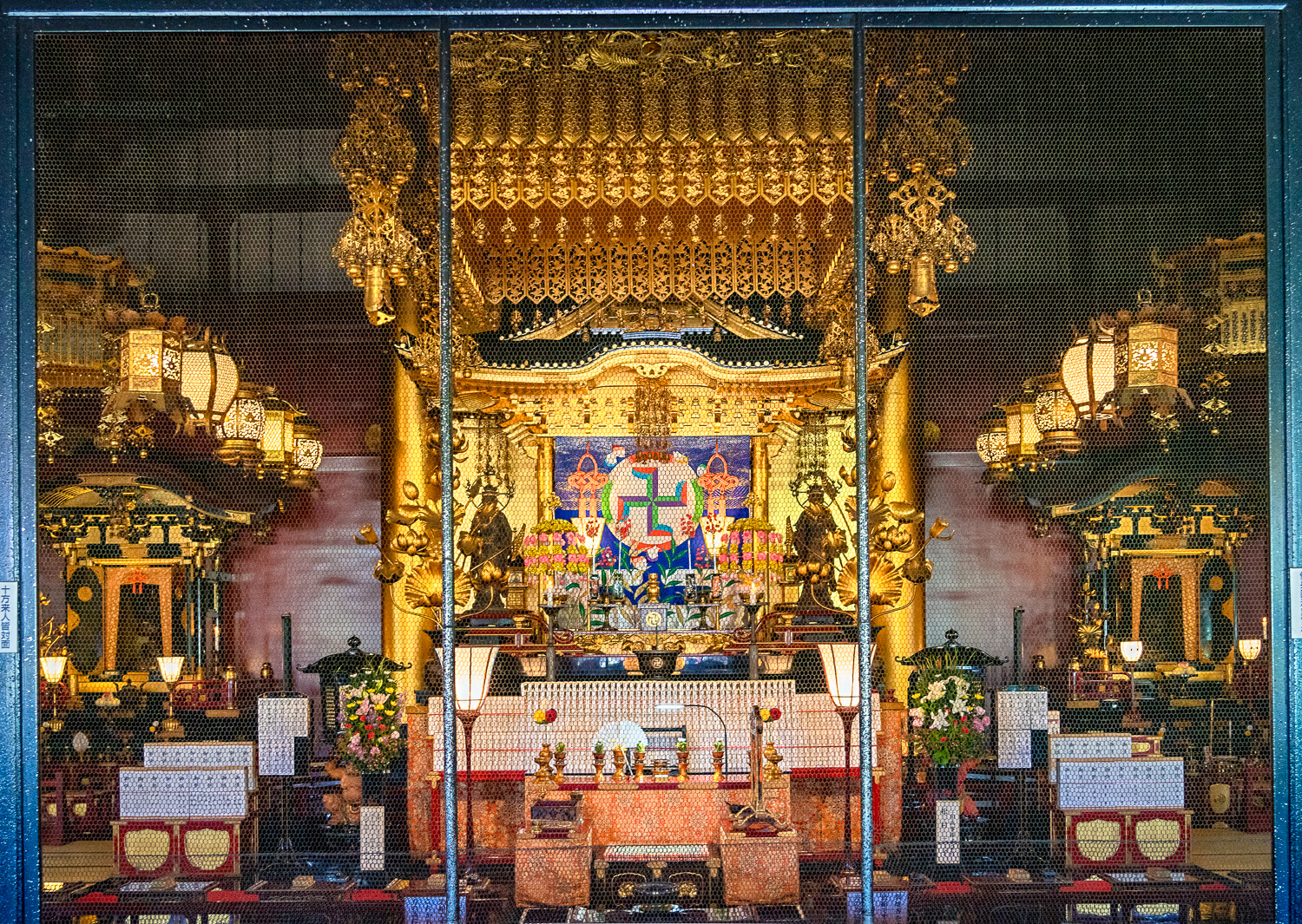
This image was taken with my Sony A7R V using my Sony FE 24-105 mm f/4 Lens set on 24 mm. The camera was set on Manual mode with the aperture set at f/4, shutter speed at 1/125th of a second, and ISO set at 1600. I used a Circular Polarizing Filter to minimize the glare. I handheld the camera and captured a single image which I proccessed in Lightroom and completed it in Photoshop using Nik Color Efex 7.

T. Kahler Photography
© 2026 T. Kahler Photography, All Rights Reserved
Talk about ornate! Wow